
Hit a Deer in Michigan? How Insurance Usually Handles It
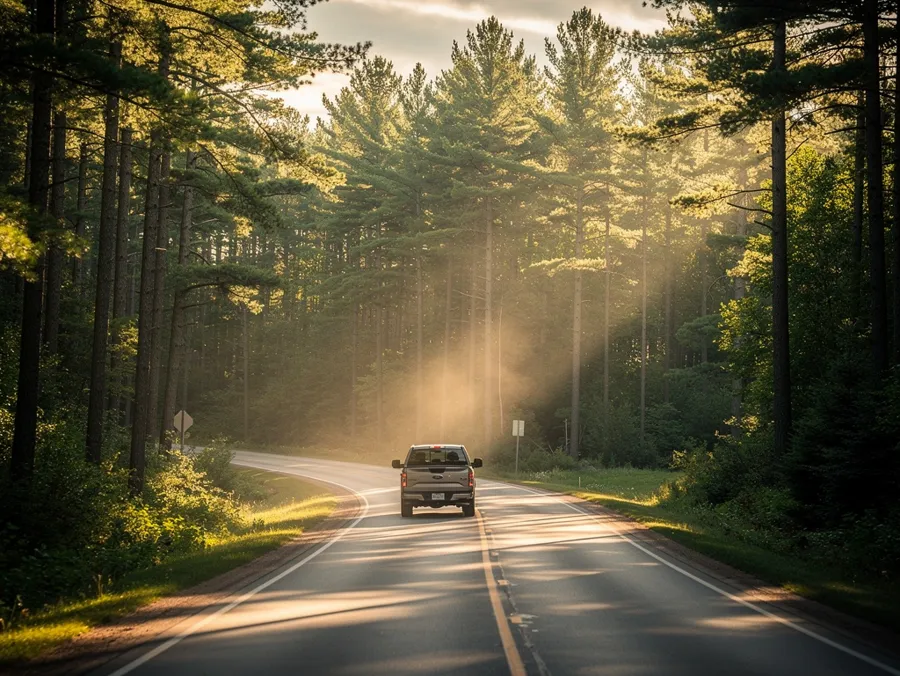
If you hit a deer in Michigan, the damage to your car is usually handled under comprehensive coverage, not collision, and not by your basic no-fault policy. Comprehensive is optional here, so if you never added it you may be paying for the repairs yourself. Injuries are a separate question, and those generally go through the personal injury protection (PIP) part of your no-fault policy.
That’s the short answer. The rest of this is what we tell people across the counter every fall.
When do most deer crashes happen in Michigan?
Right about now. Deer are on the move in October and November, which the Michigan DNR lists as their breeding season.
According to the 2025 Michigan Traffic Crash Facts deer report, drivers reported 58,271 vehicle-deer crashes statewide in 2025. November was the worst month with 9,821 crashes, and October was second with 8,432. Those two months alone made up about 31 percent of the year.
The same report shows 1,724 people were injured and 13 were killed in deer crashes in 2025. Eight of those killed were motorcycle riders.
Closer to home, Cheboygan County had 558 reported deer crashes in 2025. Emmet County had 536 and Otsego County had 219. If you drive I-75 between Indian River and Gaylord, or take M-27 up to Cheboygan before the sun is up, you already know why.
In 2025, the 6:00 to 8:59 a.m. window had more deer crashes than any other part of the day, and more than half happened on dark, unlit roads. The Michigan State Police also note that about 80 percent of deer crashes in 2024 happened on two-lane roads. That describes most of the driving around Burt Lake and Mullett Lake.
What to do right after you hit a deer
Here’s the order we’d follow, based on guidance from the Michigan State Police and the Department of Insurance and Financial Services (DIFS):
- Get safe first. Turn on your flashers and pull onto the shoulder if you can. If the car won’t move and it’s still in a lane, get out carefully and stand well off the road.
- Stay away from the deer. A hurt deer can be dangerous, and one that looks dead may only be stunned.
- Call the police. Tell them where you are, whether anyone is hurt, whether other vehicles were involved, and whether the deer is blocking the road.
- Take pictures. Get the road, the damage and any injuries once it’s safe. If someone stopped and saw it happen, get their name and number.
- Don’t assume the car is fine. Check for leaking fluid, loose parts, tire damage, broken lights or a hood that won’t latch. If anything looks off, call a tow.
- Report it to your insurance company or to us. We will be happy to help you understand your coverage(s).
Does insurance cover hitting a deer, or does it count as collision?
DIFS describes comprehensive coverage as paying for repairs when your car collides with an animal. So a straight-on hit with a deer usually lands there. Your comprehensive deductible may not match your collision deductible, so it’s worth knowing both.
Swerving can change things. If you jerk the wheel and end up in a tree, a ditch or another car, you didn’t hit the deer. You hit something else, and that is generally treated as a collision claim. That may mean a different deductible. If you carry limited collision, or no collision at all, it may mean the car isn’t covered for that crash. In its guide to collision coverage, DIFS uses “you hit a tree” as an example of a crash where you are more than 50 percent at fault.
It’s also the more dangerous choice. The Michigan State Police say the most serious deer crashes happen when drivers swerve and hit another vehicle or a fixed object, or roll over. Their advice is plain: don’t swerve. Brake firmly, hold the wheel with both hands and try to stay in your lane.
Every policy is written a little differently, so none of this is a promise about yours. The best time to find out what your policy does with a deer is before one walks out in front of you.
How does Michigan no-fault handle injuries from a deer crash?
This part confuses a lot of people. Your basic no-fault policy does not pay to fix your own car. What it does pay for is injuries.
According to DIFS, personal injury protection pays reasonable and necessary medical expenses up to the PIP coverage level selected on the policy. Since the 2020 reform, drivers choose among several PIP levels, so what you have depends on what was picked when your policy was written or renewed.
There’s no other driver to blame when the other party is a deer. That’s why your own policy matters so much here.
A quick check before November
Pull out your declarations page and look for three things:
- Whether you have comprehensive coverage at all
- Your comprehensive and collision deductibles
- Which PIP medical level you chose
If any of that is unclear, call or stop in with your questions. You can look over our auto insurance page, read about auto insurance in Cheboygan, or ask for a quote. We are an independent agency, which means we can shop for you across many carriers, comparing coverage and rates to give you more flexibility and choice.
We understand how much a deer strike can throw off your week, and we are here to help because we live here too. Call us at 231-238-9882 or stop in at 3785 S. Straits Hwy. in Indian River and talk to an actual person who will be happy to help you.
Questions we get asked.
Does insurance cover hitting a deer in Michigan?
Damage to your own vehicle from hitting a deer is usually handled under comprehensive coverage, which is optional in Michigan. The required no-fault policy does not pay to fix your own car. Policies differ, so check your declarations page or call us with your questions.
Is hitting a deer comprehensive or collision?
The Michigan Department of Insurance and Financial Services lists collision with an animal under comprehensive coverage. If you swerve and hit a tree, a guardrail or another car instead, that is generally treated as a collision claim. The two can carry different deductibles.
Do I need to call the police after hitting a deer in Michigan?
Michigan State Police and DIFS both advise reporting a deer crash to the police. Your insurance company may ask for the police report number if you have one.
Who pays for injuries if I hit a deer?
Under Michigan no-fault, personal injury protection (PIP) on your own auto policy generally pays medical expenses up to the PIP level you chose, no matter who or what caused the crash. Your exact benefits depend on your policy, so ask us if you are unsure what you picked.
Related coverage
More from the blog
Need auto insurance?
We will shop it across our carriers, then call you back and talk it through. No obligation.